History
Monopoly Was Created to Criticize Monopolies: Lizzie Magie’s Game
Before Monopoly became a game of domination, Lizzie Magie’s Landlord’s Game taught an economic warning. Explore the real origin story.
Updated 3 min read

In this story
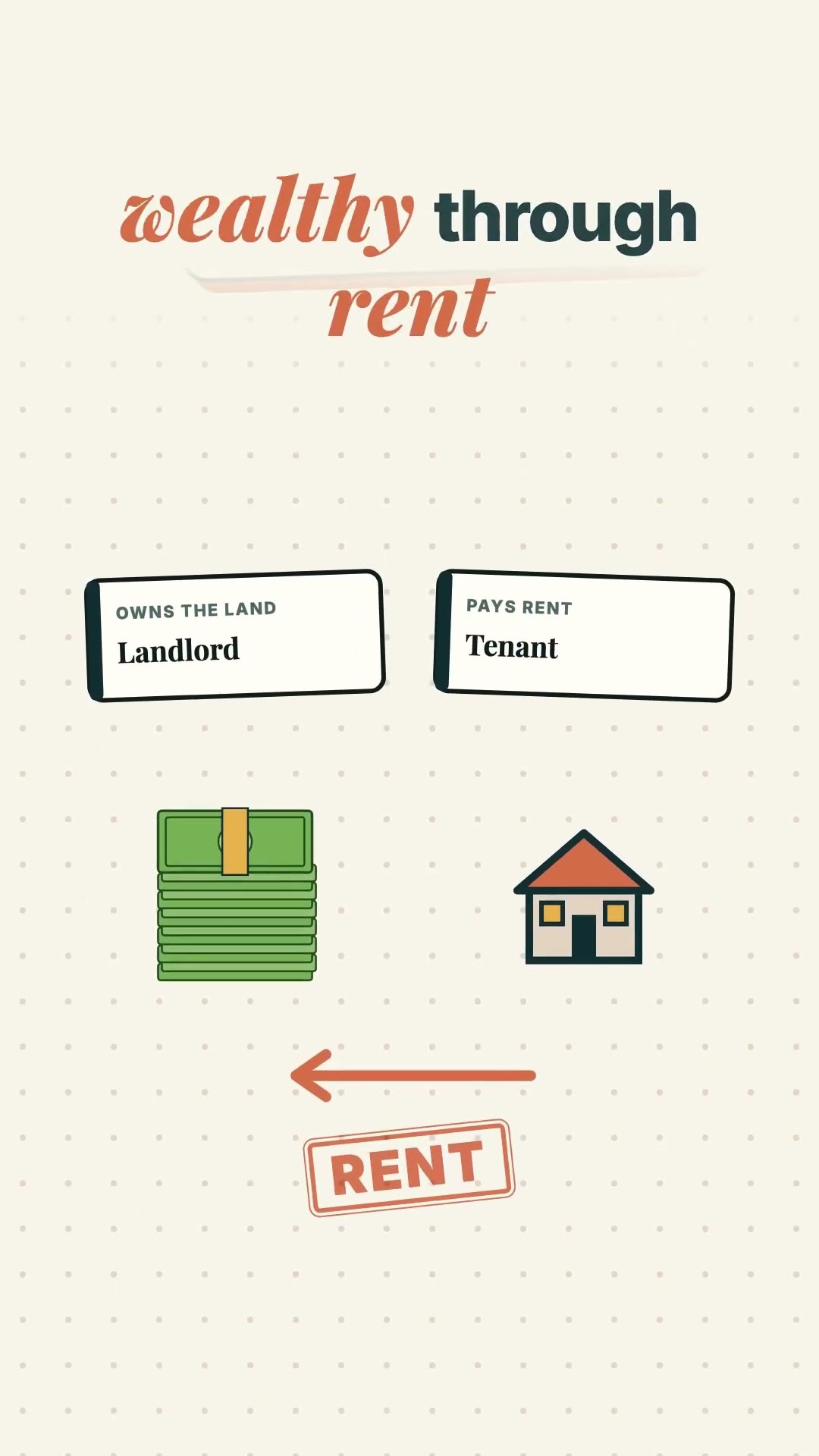
Monopoly is a game about buying property, charging rent, and driving opponents toward bankruptcy. The wealthiest player wins. That makes its origin especially ironic: an important predecessor was invented to show why concentrated land ownership could be unfair.
A board game with an economic argument
Magie was an inventor and social activist interested in questions of wealth, rent, and land ownership. She was influenced by Henry George, an economist and reformer who argued that income derived from land deserved special scrutiny and favored a land-value tax.
But a lecture about land economics could be difficult to make engaging. A board game could give players a direct experience: move around a board, acquire or rent property, pay charges, and observe how advantages accumulate.
The goal was not simply to reward the cleverest property owner. It was to make the system itself visible.
The Smithsonian’s National Museum of American History explains that Magie’s game was intended to expose the problems associated with monopolies and explain George’s ideas.
What did The Landlord’s Game look like?
The early game already featured ingredients that would sound familiar to Monopoly players: a square board, property spaces, payments, railroads, and the possibility of landing in jail.
Magie’s design gave those familiar mechanics a different purpose. The player could see how control over land could generate income for owners while imposing costs on others.
The Smithsonian Lemelson Center discusses Magie’s 1904 patent and a later 1924 patent, which made her educational intentions particularly explicit.
Historians also describe versions or rule sets contrasting monopolistic accumulation with more widely shared prosperity. That is a useful part of the history, though the precise rules and their variations deserve more care than the slogan that “the original Monopoly had only one set of anti-capitalist rules.”
How did Monopoly become the game we know?
Over the following decades, versions of The Landlord’s Game circulated and changed. Players adapted boards and rules, and the property-trading concept spread beyond its original circle.
In the 1930s, Charles Darrow developed and sold a version that became the commercial Monopoly phenomenon. Parker Brothers published Monopoly in 1935. For years, the familiar account centered Darrow as its creator, obscuring Magie’s earlier role and the many people who contributed to the game’s evolution.
It is more accurate to describe modern Monopoly as having a complex history of adaptation and commercialization than to suggest that one person simply renamed a finished board game overnight.
Why the game’s meaning changed
The commercial version rewards building monopolies and bankrupting rivals. It is an absorbing competitive structure, but it pulls players toward the very concentration of wealth Magie wanted them to question.
The irony is part of the story—not proof that the game’s publishers intended to celebrate real-world harm. A game can communicate a different message once its mechanics, rules, marketing, and audience change.
Magie’s story also raises a recurring question about invention: who gets credit when a popular product grows out of earlier work that was less famous or less commercially successful?
Frequently asked questions
Who really invented Monopoly?
Lizzie Magie’s The Landlord’s Game was a major precursor. Modern Monopoly evolved through multiple versions before Charles Darrow’s commercial success and Parker Brothers’ publication in 1935.
What year was The Landlord’s Game patented?
Magie’s original patent was issued in 1904; she received another patent for a revised version in 1924.
Was Monopoly originally meant to criticize monopolies?
Magie’s educational purpose was to illustrate problems of land monopolies and explain economic alternatives. The commercial game’s emphasis became competitive property accumulation.
Short film
You've played Monopoly. You probably missed the point.
youtube · 0:46
The short uses the same reporting as this article. No third-party player is loaded on this page.
Watch on youtubeSources
- Playing Monopoly and Its Discontents — Smithsonian
- Woman Inventor Behind Monopoly — Smithsonian Lemelson Center

Creator
Funda Tabak
PMP® certified project manager. She has coordinated IdeallyFree’s content since 2010. Full bio
This story is for general understanding. It is not safety, legal, or technical advice.